Abrablog
Spare Tire: How Long Can You *Really* Drive On It Safely?
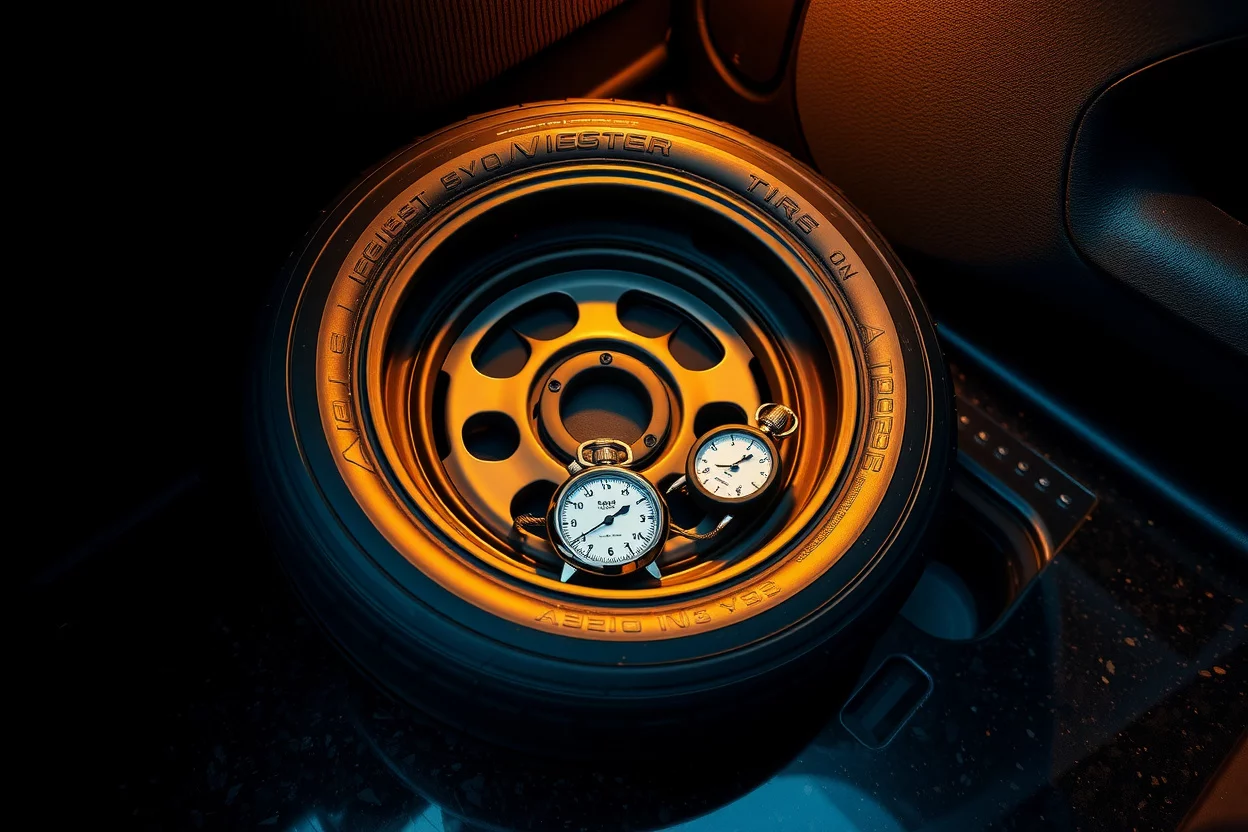
You’re driving along, minding your own business, when suddenly, a dreaded thud and the sickening realization: a flat tire. Relief washes over you as you remember that trusty spare in the trunk. But wait, how far can you actually go on that thing? Is it just a quick hop to the nearest garage, or can you cover some serious distance? Understanding spare tire how long can you drive on it is absolutely crucial for your safety and to prevent expensive damage to your vehicle. It’s not just about getting off the side of the road; it’s about making an informed, safe decision in a pinch.
The Donut Dilemma: Strict Limitations of Compact Temporary Spares
Let's be brutally honest: that small, often goofy-looking wheel in your trunk isn't meant for a cross-country road trip. We're talking about the compact temporary spare tire, affectionately (or not so affectionately) known as the "donut." These tiny saviors are standard in most modern vehicles, designed to be lighter and save precious cargo space. But their temporary nature comes with a strict set of rules, rules you absolutely cannot afford to ignore.
First off, let's talk distance. How far can you push it? Manufacturers and experts are pretty much in agreement: you should drive no more than 50 to 70 miles on a donut spare. That’s it. Period. Think of it as a leash, a very short leash, giving you just enough slack to reach a service station or your home, not your vacation destination.
Then there’s the matter of speed. You absolutely should not exceed 50 mph when driving on a donut spare. Some safety-conscious voices even suggest a maximum of 30 mph in less-than-ideal conditions like wet or snowy weather. Why so slow? These tires are fundamentally different from your regular rubber. They have a narrower tread pattern, a thinner rubber compound, and significantly limited tread life. This all translates to reduced traction, compromised stopping power, and a general lack of control compared to a full-sized tire. Slamming on the brakes at highway speeds with a donut on could be a truly terrifying, and dangerous, experience.
And don’t forget the air pressure. This is often overlooked, but vital. The required tire pressure for a donut spare is typically around 60 PSI, which is much higher than your standard tires. Always check the sidewall of your spare for the correct PSI before you even think about driving. Proper inflation is paramount for maintaining what little stability and performance it can offer. Driving on an underinflated donut is just asking for trouble.
Why are these limitations of a spare tire so stringent? Beyond the obvious physical differences, driving with a mismatched tire diameter puts stress on your vehicle’s drivetrain. The differential, for instance, has to work harder because the wheels are spinning at different rates. This added strain isn’t something your car’s components are built for over extended periods, making the temporary spare tire lifespan incredibly short by design. It's truly just an emergency fix, nothing more.
Full-Size Freedom: The Performance of a "Real" Spare
Ah, the full-size spare. A rarity in new cars these days, and perhaps a mark of a bygone era of automotive practicality. If your vehicle is one of the lucky few to still carry a full-size spare, you’ve hit the jackpot, relatively speaking. These spares are identical in size to your vehicle’s regular tires, offering a far more seamless and reassuring driving experience after a flat.
So, what are the speed limit for spare tire and distance guidelines for one of these? Here’s the good news: a full-size spare, provided it’s properly inflated and in good condition, can generally be driven on for longer distances and at regular speeds, much like a standard tire. This is a game-changer compared to the donut.
However, even with a full-size spare, a word of caution is warranted. It’s always advisable to replace your damaged tire as soon as possible. Why? Well, that spare might be older than your other tires, or it could be a different brand, or have a slightly different tread depth. Even these subtle differences can affect handling, cause uneven wear on your other tires, and potentially impact fuel efficiency. If your full-size spare is truly identical in make, model, and wear to your other tires, you're in the best possible scenario and it can deliver similar performance. But treat it as temporary until you can get a proper, matched replacement for the damaged tire.
Beyond Spares: A Quick Look at Run-Flat Technology
While not a spare tire in the traditional sense, run-flat tires are another solution to punctures, found on many newer luxury or performance vehicles that often forego a spare entirely. These tires are engineered with reinforced sidewalls that allow them to remain functional for a limited distance after a puncture or complete loss of air pressure. They're clever, but they too have their own set of rules.
If you find yourself with a punctured run-flat, you’re typically looking at a maximum driving distance of 50 to 70 miles. Sound familiar? It’s similar to the donut spare’s range, giving you enough to reach a repair shop. And just like with donuts, the speed limit for spare tire logic applies here: the speed limit for driving on a punctured run-flat tire is usually 50 mph. Don’t push it. The reinforced sidewalls only offer so much protection, and exceeding these limits can lead to further damage to the tire, rim, or even loss of control.
The Perils of Pushing It: What Happens If You Drive Too Long on Spare?
So, what’s the big deal if you stretch those limits a bit? "I'm just going a little further," you might think. But driving long distances on a spare, especially a donut, is a gamble with genuinely high stakes. The risks aren’t just about getting another flat; they involve significant safety compromises and potential, very costly, vehicle damage.
Firstly, your safety is on the line. Decreased stopping power is a huge concern; that tiny tire simply can’t provide the same grip or surface area as a full-sized one. This translates to longer braking distances and reduced control, making you far more susceptible to skidding or hydroplaning in adverse conditions. Imagine trying to make an emergency stop on the highway with severely compromised braking. It's a recipe for disaster.
Beyond immediate safety, your vehicle itself can take a beating. Prolonged use of a donut spare can put incredible stress on your vehicle’s transmission, differential, suspension components, and wheel bearings. Why? Because the mismatched tire sizes force these parts to work unevenly, straining them in ways they aren’t designed for. In all-wheel-drive (AWD) vehicles, the issues are even more pronounced. A mismatched tire can cause significant issues and premature wear to the entire drivetrain, potentially leading to thousands of dollars in repairs. It’s like trying to run a marathon with one shoe a size too small – something’s going to give.
Even your sophisticated braking system can get confused. The size difference of a donut spare can throw off your Anti-lock Braking System (ABS) and Electronic Stability Control (ESC). These crucial safety features rely on consistent wheel speeds and traction data. When one wheel is spinning at a significantly different rate, the system might deactivate itself or, worse, malfunction, leaving you without key electronic aids when you need them most. Suddenly, a simple flat tire turns into a complete lack of modern safety tech.
And let’s not forget the spare tire itself. Donut spares are not built for endurance. They are more vulnerable to road hazards and can overheat much faster than a regular tire. This significantly increases the risk of yet another blowout, leaving you stranded once again, but this time with no backup.
Aging Gracefully (or Not): When to Replace a Spare Tire
You might think, "My spare has never been used, it's practically new!" And while it might look pristine, tires, including spares, degrade over time regardless of use. Exposure to heat, moisture, air, and UV light takes its toll on the rubber compounds, making them brittle and less reliable.
So, when to replace a spare tire? While some tires can physically last up to 10 years, many experts suggest a more conservative lifespan of 6 years for all tires, including your spare. After 5 years, close inspection is highly recommended. To figure out your tire's age, look for the manufacturing date – a four-digit number on the sidewall indicating the week and year of production (e.g., "0122" means the first week of 2022).
Maintenance isn’t just for the tires on your car; your spare needs love too. Spare tires should be inspected periodically for tread depth, signs of rubber integrity issues (cracks, dry rot), and most importantly, air pressure. Even if it’s tucked away in the trunk, it will slowly lose air. Imagine finally needing your spare only to find it flat. That’s a terrible surprise! If you're fortunate enough to have a full-size spare, incorporating it into your regular tire rotation schedule can help maintain even wear across all your tires, prolonging their life and ensuring that "spare" is always ready to perform like its brethren.
Your Road Ahead: Don't Get Stranded by Misinformation
A flat tire is an inconvenience, yes, but it doesn't have to turn into a full-blown emergency. Knowing the real score about spare tire how long can you drive on it, understanding the stark differences between a compact donut and a full-size spare, and respecting the limitations of a spare tire empowers you to make smart, safe decisions on the road. Don't be that driver pushing a donut past its limits, risking a breakdown, vehicle damage, or worse. Take the time to understand your spare, maintain it, and always prioritize getting your full-sized tire repaired or replaced promptly. Your safety, and your car's longevity, depend on it. Drive smart, drive safe, and keep those wheels rolling smoothly.